Gluten Free Pie Crust

This post may contain affiliate links. Please read our disclosure policy.
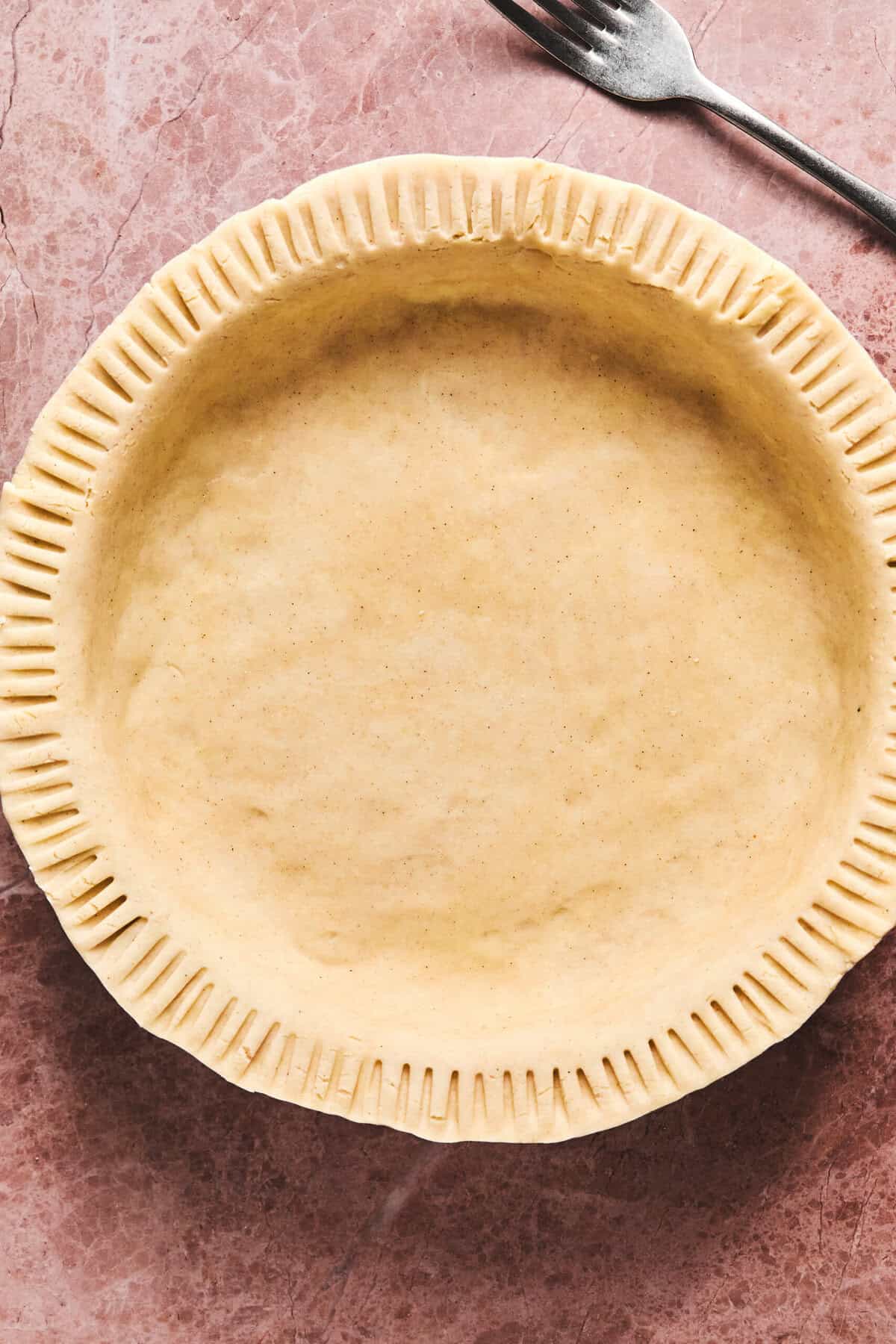
This is the BEST Gluten Free Pie Crust! This simple, tender, flaky gluten free shortcrust pastry pie crust comes together in just 15 minutes, ready to be chilled, rolled and used in your favorite pie recipe!
Need some inspiration for fillings? Use this gluten free pie crust to make my Blueberry Pie, Caramel Coconut Macadamia Nut Pie, Easy Pumpkin Pie, Apple Pecan Pie, or my Brown Sugar Walnut Apple Pie!

Why This Recipe Works
It uses only a handful of ingredients: Only 7 ingredients go into this easy gluten free pie crust, and you won’t have to order anything online as gluten free all purpose flour blends and xanthan gum are easy to find in most large grocery stores.
It’s super versatile: This really is the perfect gluten free shortcrust pastry recipe, ready to be used in your favorite recipes for either single or double crust pies — just make sure the recipe you are following for the pie filling is gluten free too!
Ingredients

- Gluten free all purpose flour blend: This gluten free pie crust is quite versatile, so any brand should work!
- Sugar
- Xanthan gum: This is a key ingredient in most gluten-free bakes as it adds back in elasticity and makes doughs in particular much easier to handle.
- Salt
- Cold butter: Using it cold from the refrigerator you’ll get the flakiest pie crust. Use European-style butter for the best results.
- Ice water: Super cold water will also help create a flaky crust!
- Apple cider vinegar
Here’s How To Make It
- Mix the dry ingredients: In a large bowl, whisk together the flour blend, sugar, xanthan gum and salt until combined.

- Rub in the butter: Toss in the cubed butter and rub it into the flour using your fingertips to make a rough sand-like mixture. You’re done when there are no solid cold lumps of butter remaining, and the mixture is starting to clump. With a gluten free flour, it is better to do this by hand rather than in a food processor or using a pastry cutter.

- Add the liquid: Stir together the ice water and apple cider vinegar. Gradually pour into the mixture, using a cutting motion with an eating knife, turning the bowl a little each time, to bring a dough together. Once all the water is used up switch to your hands, bringing the mixture together into a bowl of smooth dough. Add a little more water if you need it, as the absorption levels in different brands of gluten free flour differ.

- Chill: Carefully shape the dough into a thick disk before wrapping in food wrap and chilling for 30 minutes. Then, proceed with the instructions to lining the pan for your chosen recipe, rolling the pie crust out on a piece of baking parchment so you can transfer it to the pan without it breaking or cracking.

Expert Tips
- Keep the ingredients cold! To achieve perfectly tender and flaky scones, make sure your butter and heavy cream are very cold. This helps create the perfect texture!
- Skip the pastry cutter. Working with gluten free flour blends, you will get much better results if you rub the flour into the butter the old fashioned way by hand.
- Roll the crust on a piece of baking parchment. Gluten free pastry can crack really easy, so once you have rolled it is easier to pick up to line the pan if you roll it out on a piece of baking parchment first.
- Bake the pie on a metal baking sheet. Unless you are using a ceramic pie dish, bake it on top of a baking sheet that has been in the one during preheating to help avoid a soggy bottom and generally underdone pastry.
FAQs
I’ve not tried it with all brands of gluten free all purpose flour, but usually a gluten free pie crust won’t freeze well so I would recommend storing it in the refrigerator if you need to make it ahead.
Your pie crust can shrink for a number of reasons. First is you did not chill it properly before baking. Follow the pie filling recipe carefully and if you need to chill a regular crust a second time after rolling to make the recipe work, you’ll need to chill a gluten free one as well. Also be careful not to stretch the dough as you press it into the pie dish (that will cause it to shrink too) and make sure your butter and water are super cold when you’re making the dough.
More Easy Gluten Free Recipes To Try
When you make this recipe, snap a photo and tag me on social – I love connecting with you and seeing what you’re up to in the kitchen!

Gluten Free Pie Crust
Ingredients
- 2 cups gluten free all purpose flour
- ½ tbsp sugar
- 1 tsp xanthan gum
- pinch of salt
- 1 ½ sticks butter, cold and cubed
- 3 tbsp ice water
- 1 tsp apple cider vinegar
Instructions
- In a large bowl, whisk together the flour blend, sugar, xanthan gum and salt until combined.
- Toss in the cubed butter and rub it into the flour using your fingertips to make a rough sand-like mixture. You’re done when there are no solid cold lumps of butter remaining, and the mixture is starting to clump. With a gluten free flour, it is better to do this by hand rather than in a food processor or using a pastry cutter.
- Stir together the ice water and apple cider vinegar. Gradually pour into the mixture, using a cutting motion with an eating knife, turning the bowl a little each time, to bring a dough together. Once all the water is used up switch to your hands, bringing the mixture together into a bowl of smooth dough. Add a little more water if you need it, as the absorption levels in different brands of gluten free flour differ.
- Carefully shape the dough into a thick disk before wrapping in food wrap and chilling for 30 minutes. Then, proceed with the instructions to lining the pan for your chosen recipe, rolling the pie crust out on a piece of baking parchment so you can transfer it to the pan without it breaking or cracking.
Notes
- Keep the ingredients cold! To achieve perfectly tender and flaky scones, make sure your butter and heavy cream are very cold. This helps create the perfect texture!
- Skip the pastry cutter. Working with gluten free flour blends, you will get much better results if you rub the flour into the butter the old fashioned way by hand.
- Roll the crust on a piece of baking parchment. Gluten free pastry can crack really easy, so once you have rolled it is easier to pick up to line the pan if you roll it out on a piece of baking parchment first.
- Bake the pie on a metal baking sheet. Unless you are using a ceramic pie dish, bake it on top of a baking sheet that has been in the one during preheating to help avoid a soggy bottom and generally underdone pastry.
Nutrition
Nutrition information is automatically calculated, so should only be used as an approximation.